
What should an AC tune-up cover?
- Thermostat operation and the cooling call
- Electrical connections, capacitors, contactors, and operating components
- Filter condition and visible airflow restrictions
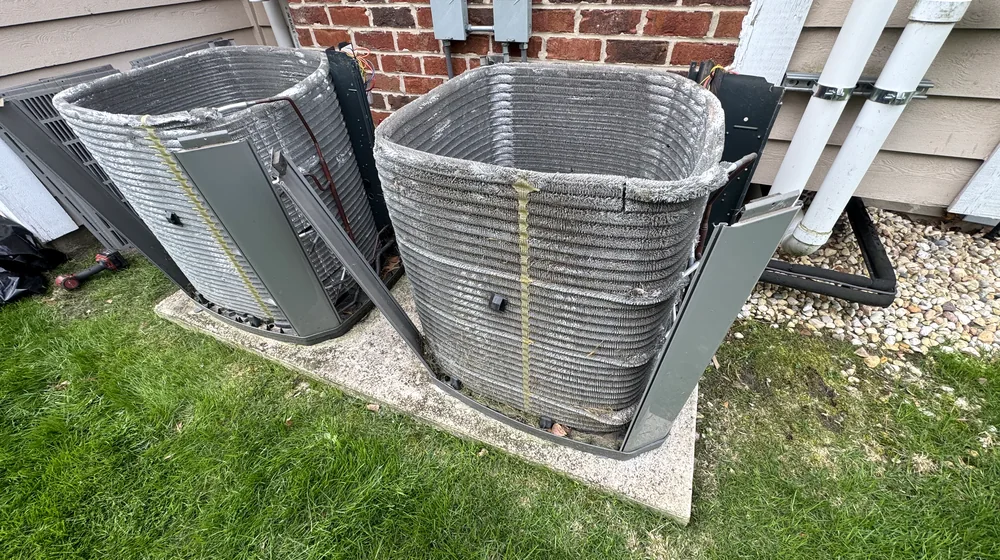
- Outdoor condenser coil condition and cleaning where appropriate
- Indoor coil condition when accessible and indicated
- Condensate drain, pan, pump, and safety switch where present
- Refrigerant performance and temperature change when the system calls for those measurements
- Overall startup, run cycle, and shutdown
What should a heating tune-up cover?
- Thermostat and control operation
- Filter, blower, and airflow checks
- Electrical connections and safety controls
- Ignition, burners, and flame operation where applicable
- Heat exchanger and accessible venting or flue components
- Operating cycle, temperature performance, and unusual noise or odor
A tune-up is not the same as a diagnostic
If the equipment is already not cooling, not heating, leaking, tripping a breaker, or making a new mechanical noise, book a service call. Maintenance is preventive; a known failure needs focused diagnosis.
How often should HVAC maintenance be scheduled?
Many homeowners schedule cooling service before summer and heating service before winter. The best interval also depends on equipment age, manufacturer requirements, operating conditions, pets, filtration, and previous findings.
What should you receive afterward?
You should understand what was checked, what was cleaned or adjusted, what needs attention now, and what can be monitored. Recommendations should connect to an observed condition rather than a generic replacement pitch.
Prepare for the appointment
- Clear a safe path to indoor and outdoor equipment
- Note unusual sounds, odors, temperatures, or recent utility changes
- Have the filter size and any previous service information available
- Keep pets away from the work area
Source: The ENERGY STAR HVAC maintenance checklist recommends annual pre-season checkups and includes controls, electrical connections, drainage, coils, refrigerant, and heating-specific inspections.